Neuroplasticity: How Movement Helps the Brain Learn & Grow
As humans, movement starts in the brain.
Before you lift your arm, take a step, or balance on one leg, your brain sends electrical signals down through the nervous system to activate muscles. This is often described as a top-down process; the brain plans and initiates movement, and the body executes it.
But the brain doesn’t just control movement.
It adapts to it.
Throughout life, our bodies respond to environmental stimuli — learning new skills, exercising, experiencing stress, and recovering from injury. These experiences can create structural and functional changes within tissues and organs.
The brain is especially adaptable.
When changes occur in the brain in response to experience, learning, or rehabilitation, this process is called neuroplasticity.
🧠 What Is Neuroplasticity?
Neuroplasticity refers to the brain’s ability to reorganise itself by forming new neural connections and modifying existing ones.
From early development through to ageing, the brain remains responsive to how it is used. Movement, repetition, challenge, and meaningful engagement all shape the structure and efficiency of neural pathways.
In simple terms:
Neuroplasticity is the brain’s ability to change in response to experience.
This is the foundation of rehabilitation and Exercise Physiology practice.
🔬 What Happens in the Brain?
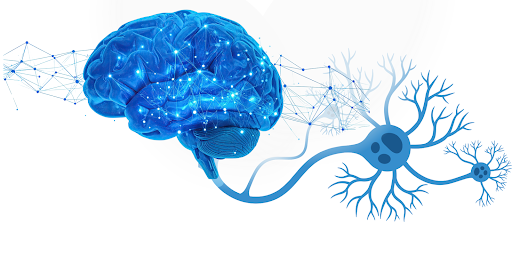
Neuroplasticity can involve:
• Formation of new neural connections
• Strengthening or weakening of existing pathways
• Neurogenesis (creation of new neurons in certain regions)
• Increased production of neurotrophic factors such as BDNF
• Changes in cell growth, signalling, and efficiency
These biological changes allow the central nervous system to adapt to physical, psychological, and environmental demands, including structured exercise.
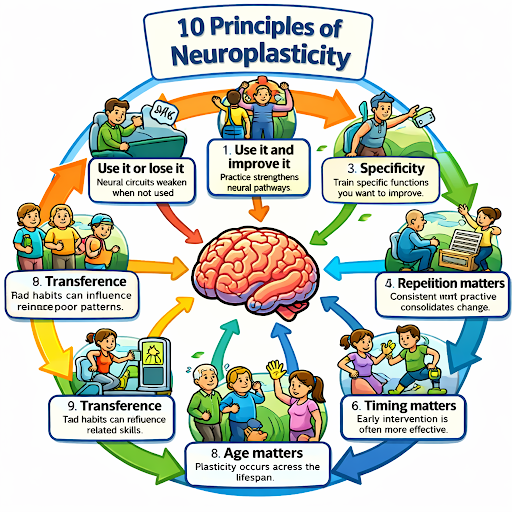
10 Principles of Neuroplasticity
The brain changes according to how it is used. These principles guide how we design effective rehabilitation and training programs.
1: Use it or lose it.
Neural circuits that aren’t activated regularly begin to weaken. If a skill isn’t practiced, especially after injury, the brain reduces its representation of that function.
2: Use it and improve it.
Targeted practice strengthens neural pathways. The more appropriately you train a function, the more efficient and refined it becomes.
3: Specificity.
Train what you want to improve. Practicing balance improves balance. Practicing reaching improves reaching. General movement does not automatically transfer to specific skills.
4: Repetition matters.
Lasting neural change requires consistent repetition. One session isn’t enough, the brain needs ongoing input to consolidate learning.
5: Intensity matters.
Challenge drives adaptation. Training must be sufficiently demanding (while remaining safe) to stimulate meaningful neural change.
6: Timing matters.
The brain can be particularly responsive after injury. Early, appropriate intervention often leads to stronger outcomes, but improvement remains possible at any stage.
7: Salience matters.
The brain changes more when the task is meaningful. Motivation, attention, and emotional relevance significantly enhance learning and recovery.
8: Age matters.
Neuroplasticity occurs across the lifespan. Younger brains may adapt more quickly, but older adults can still achieve meaningful improvements with the right stimulus.
9: Transference.
Training one skill can positively influence related skills. Exercise can also create a biological environment that supports broader brain adaptation.
10: Interference.
Not all plasticity is beneficial. Compensatory habits, shortcuts, or poorly timed interventions can reinforce less optimal movement patterns that may later need retraining.
💡 Why This Matters
Neuroplasticity explains why movement is such a powerful therapeutic tool.
Exercise is not just about muscles and fitness. It influences how the brain organises, strengthens, and refines movement patterns.
When training is:
Task-specific
Repetitive
Appropriately intense
Timelyf
Meaningful
…it promotes neural adaptation that supports functional improvement.
Movement doesn’t just change the body.
It changes the brain.