Why Routine Helps Kids With ASD & ID Thrive in Exercise
Routine makes exercise predictable—and that makes it doable. For many children with autism spectrum disorder (ASD) and/or intellectual disability (ID), a repeatable session can reduce stress and support skill-building ie. arrival → warm‑up → main → cool‑down → transition.
Parents/carers, therapists and teachers. Key message: keep the structure steady. Make time and steps visible. Change one thing at a time.
Why routine helps
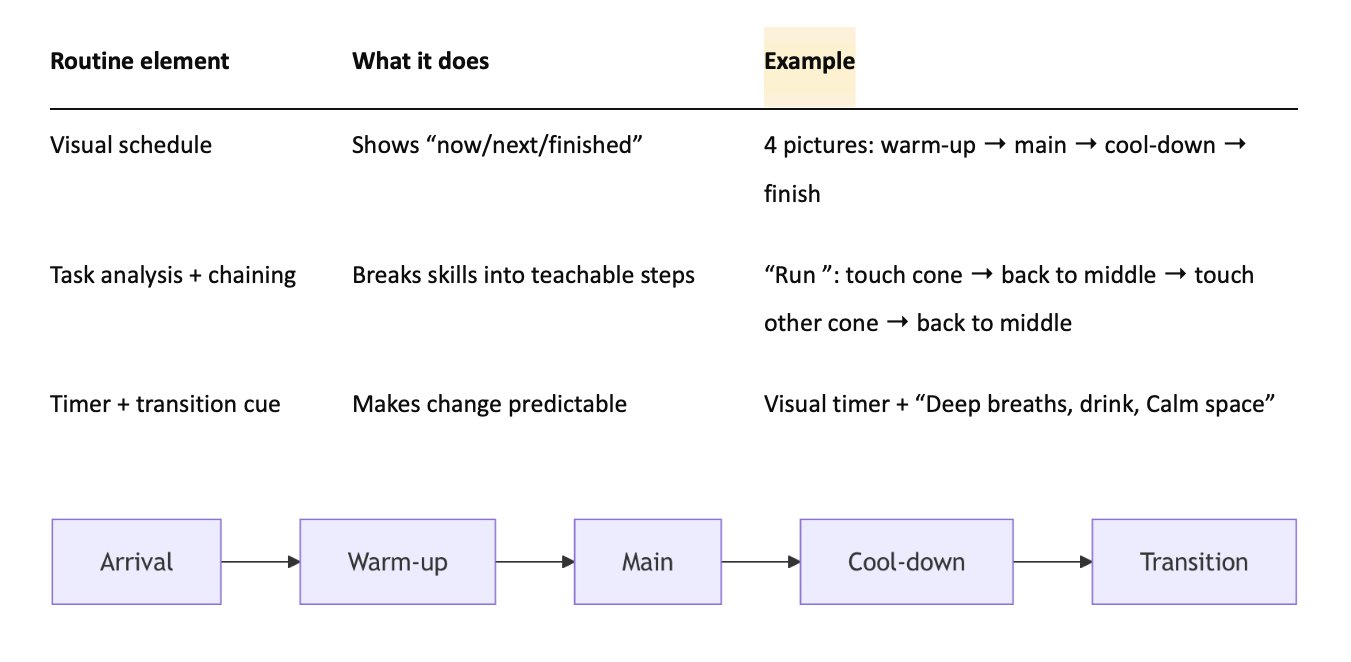
Think of routine as the sat‑nav: less arguing, more going. Predictability supports reduced anxiety and smoother transitions; repetition supports motor learning; a fixed session lowers executive function load; and steadier environments support sensory processing (fewer unexpected noises, space changes, or equipment surprises)[2].
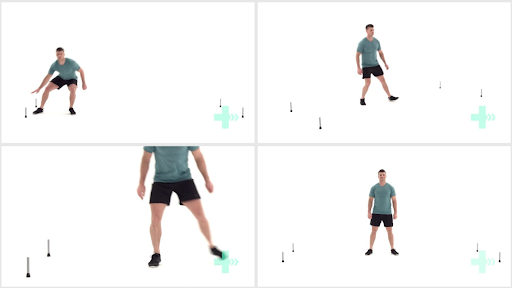
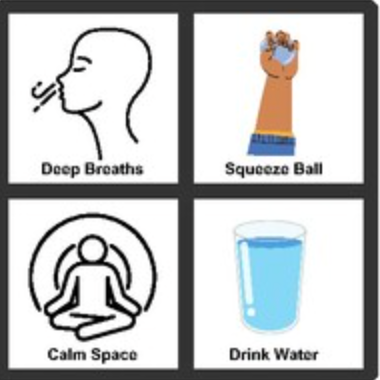
Practical routine tools
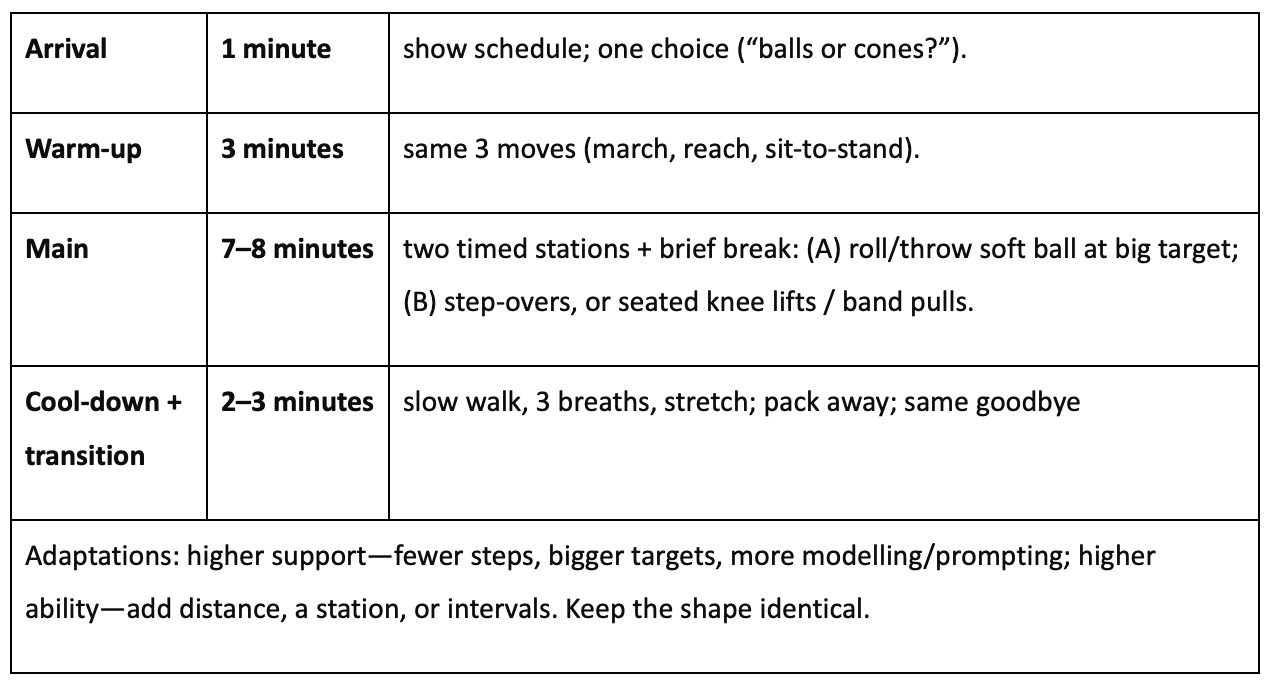
A short session you can reuse
This is a 10–15 minute session with built-in predictability.
Safety and measurement
Scan for slips/trips, add water breaks, and use communication/sensory supports (quiet corner, headphones, predictable personal space)[2].
Measure: “minutes engaged” + prompt level (independent → verbal → model → physical).
Evidence summary
Public health guidance recommends children and teens aim for about 60 minutes/day of moderate‑to‑vigorous movement, and it can be built from short bursts[1]. Clinical guidance recommends reasonable adjustments for autistic children and young people, including meaningful visual support and sensory‑aware tweaks (for example, lighting/noise)[2]. Moreover, research suggests exercise programmes can benefit children with ASD (including pooled reductions in repetitive/stereotyped behaviours in some analyses). Reviews in children and adolescents with ID find interventions to increase physical activity have mixed success—so practical delivery supports matter[3].
Footnotes
[1] World Health Organization and Centers for Disease Control and Prevention physical activity recommendations for children/teens.
[2] NICE CG170; National Autistic Society; AFIRM.
[3] Exercise evidence syntheses in ASD and ID.