Movement for Attention, Focus & School Readiness
How Exercise Supports Children with Disabilities
Why Movement Matters for Learning
When we talk about school readiness, we are not just talking about knowing letters or numbers. It also includes a child’s ability to focus, follow instructions, regulate their behaviour, and participate in a classroom environment.
For many children with disabilities, these areas can be more challenging due to differences in attention, sensory processing, and motor development.
This is where movement becomes important.
Physical activity plays a direct role in how the brain develops and functions. Research shows that exercise supports attention, processing speed, and executive functioning skills that are essential for learning (Donnelly et al., 2016; Hillman et al., 2008; Chang et al., 2012).
In practical terms, movement helps children to:
Feel more regulated and settled
Engage more consistently in tasks
Build the physical and cognitive skills needed for learning
For parents and support coordinators, this means that exercise is not just about “keeping kids active”. It is a key part of building readiness for school and everyday participation.
How Exercise Supports Attention and Behaviour
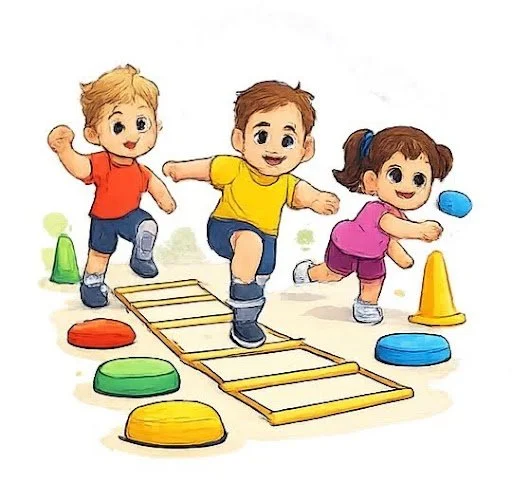
Many children find it difficult to sit still, stay focused, or manage their impulses, particularly those with conditions such as ADHD or autism.
Exercise can help with this in a very practical way.
Evidence shows that physical activity improves attention, behaviour, and self-regulation in children with ADHD (Cerrillo-Urbina et al., 2015). Even a single session of moderate exercise can improve focus and response control (Pontifex et al., 2013).
This is partly because exercise influences brain chemicals such as dopamine and norepinephrine, which play a key role in attention and behaviour (Dishman et al., 2006).
What this often looks like day-to-day:
Children are better able to stay on task
There is less impulsive behaviour
Transitions between activities become easier
For families and coordinators, this highlights that movement can be used proactively, not just as a break, but as a strategy to support regulation and engagement.
Building School Readiness Through Movement
Starting school requires more than academic knowledge. Children need the ability to:
Sit upright and maintain posture
Use their hands for writing and classroom tasks
Follow instructions and stay engaged in group settings
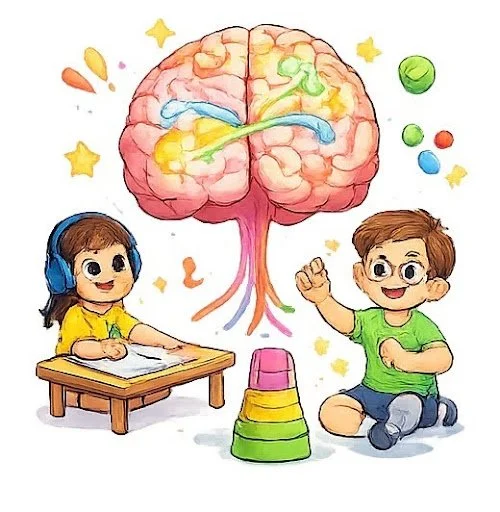
Physical development plays a big role in all of this.
Research shows strong links between physical activity, motor skills, and academic outcomes (Lubans et al., 2010). Early motor skills are also predictive of later learning success (Grissmer et al., 2010).
Movement-based activities help children to:
Build strength and endurance for sitting and participation
Improve coordination for fine and gross motor tasks
Develop the executive functioning skills needed in the classroom
For children with disabilities, these gains often translate directly into improved participation at school.

Why This Matters in the NDIS Context
Children with disabilities often face barriers to being physically active, including access, confidence, and limited opportunities (Shields et al., 2012).
Within the NDIS framework, exercise can be used as a targeted intervention to support:
Functional capacity
Social and community participation
Emotional and behavioural regulation
School readiness goals
There is also strong evidence that programs which are enjoyable and tailored to the child lead to better outcomes and long-term engagement (Bloemen et al., 2015).
For support coordinators, this means considering how movement-based supports can align with a participant’s goals.
For parents, it reinforces that structured, supported exercise can have meaningful benefits beyond physical health.
Practical Strategies You Can Use
Movement does not need to be complicated or time-consuming to be effective.
Some simple approaches include:
Short movement breaks before or between tasks
Play-based activities that match the child’s interests
Structured programs that combine fun with skill development
Consistent routines to support regulation and predictability
Even small amounts of regular movement can make a noticeable difference in attention, behaviour, and participation.
Final Thoughts
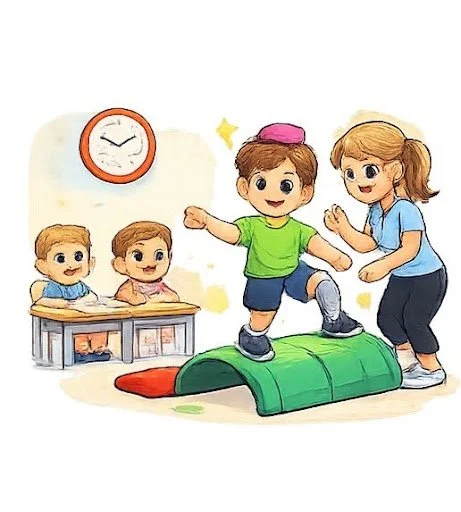
For children with disabilities, movement is a key part of development, not an optional extra.
Exercise provides a practical, evidence-based way to support attention, regulation, and readiness for school. When built into a child’s routine, it can significantly improve their ability to engage, learn, and participate in everyday environments.
References
Bloemen, M. A. T., Backx, F. J. G., Takken, T., Wittink, H., Benner, J., Mollema, J., & de Groot, J. F. (2015). Factors associated with physical activity in children and adolescents with a physical disability: A systematic review. Developmental Medicine & Child Neurology, 57(2), 137–148. https://doi.org/10.1111/dmcn.12624
Cerrillo-Urbina, A. J., García-Hermoso, A., Sánchez-López, M., Pardo-Guijarro, M. J., Santos Gómez, J. L., & Martínez-Vizcaíno, V. (2015). The effects of physical exercise in children with attention deficit hyperactivity disorder: A systematic review and meta-analysis. Child: Care, Health and Development, 41(6), 779–788. https://doi.org/10.1111/cch.12255
Chang, Y. K., Labban, J. D., Gapin, J. I., & Etnier, J. L. (2012). The effects of acute exercise on cognitive performance: A meta-analysis. Brain Research, 1453, 87–101. https://doi.org/10.1016/j.brainres.2012.02.068
Dishman, R. K., Berthoud, H. R., Booth, F. W., Cotman, C. W., Edgerton, V. R., Fleshner, M. R., Gandevia, S. C., Gomez-Pinilla, F., Greenwood, B. N., Hillman, C. H., Kramer, A. F., Levin, B. E., Moran, T. H., Russo-Neustadt, A. A., Salamone, J. D., Van Hoomissen, J. D., Wade, C. E., York, D. A., & Zigmond, M. J. (2006). Neurobiology of exercise. Obesity, 14(3), 345–356. https://doi.org/10.1038/oby.2006.46
Donnelly, J. E., Hillman, C. H., Castelli, D., Etnier, J. L., Lee, S., Tomporowski, P., Lambourne, K., & Szabo-Reed, A. N. (2016). Physical activity, fitness, cognitive function, and academic achievement in children: A systematic review. Medicine & Science in Sports & Exercise, 48(6), 1197–1222. https://doi.org/10.1249/MSS.0000000000000901
Grissmer, D., Grimm, K. J., Aiyer, S. M., Murrah, W. M., & Steele, J. S. (2010). Fine motor skills and early comprehension of the world: Two new school readiness indicators. Developmental Psychology, 46(5), 1008–1017. https://doi.org/10.1037/a0020104
Hillman, C. H., Erickson, K. I., & Kramer, A. F. (2008). Be smart, exercise your heart: Exercise effects on brain and cognition. Nature Reviews Neuroscience, 9(1), 58–65. https://doi.org/10.1038/nrn2298
Lubans, D. R., Morgan, P. J., Cliff, D. P., Barnett, L. M., & Okely, A. D. (2010). Fundamental movement skills in children and adolescents. Sports Medicine, 40(12), 1019–1035. https://doi.org/10.2165/11536850-000000000-00000
Pontifex, M. B., Saliba, B. J., Raine, L. B., Picchietti, D. L., & Hillman, C. H. (2013). Exercise improves behavioural, neurocognitive, and scholastic performance in children with ADHD. The Journal of Pediatrics, 162(3), 543–551. https://doi.org/10.1016/j.jpeds.2012.08.036
Shields, N., Synnot, A. J., & Barr, M. (2012). Perceived barriers and facilitators to physical activity for children with disability: A systematic review. British Journal of Sports Medicine, 46(14), 989–997. https://doi.org/10.1136/bjsports-2011-090236