Motivation Strategies for Kids, Teens & Adults With Disability
Motivation plays a critical role in learning, participation, independence, and achieving meaningful goals. Whether in therapy, exercise programs, school, work, or everyday life, the right motivational strategies can help individuals engage more confidently and consistently (Deci & Ryan, 2000).
It's important to remember that motivation is highly individual. What motivates one person may have little effect on another. Effective motivation strategies focus on understanding the person's interests, preferences, strengths, and goals. Rather than relying solely on rewards, the ultimate goal is to build confidence, routine, and long term independence (Ryan & Deci, 2020).
1. Create a Personalised Reward System
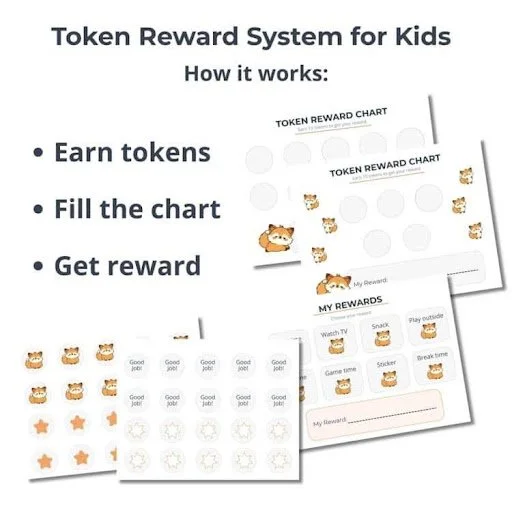
A reward system can be an effective way to encourage participation in new or challenging activities. The most successful reward systems are personalised to the individual and based on what they genuinely value (Kazdin, 1982).
Examples include:
Sticker or token charts
Choosing the next activity
Extra screen time
Listening to favourite music
Sensory activities
Social praise and recognition
Working towards a larger goal or reward
For younger children, visual token boards can be particularly effective. For teenagers and adults, rewards often work best when they involve increased choice, autonomy, or progress towards a meaningful personal goal.
The focus should always be on recognising effort and participation rather than perfection. Positive reinforcement has been shown to increase engagement and encourage the development of new behaviours when applied consistently (Kazdin, 1982).
2. Gradually Reduce External Rewards
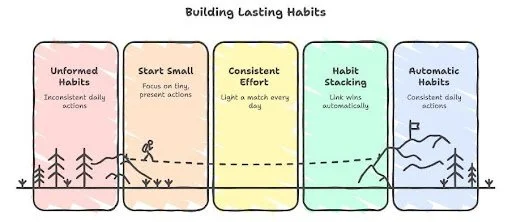
Rewards can be very helpful when establishing a new behaviour, but they should not be required forever.
As confidence and consistency improve, rewards can gradually be reduced. This helps individuals develop internal motivation and allows the behaviour to become part of their routine (Ryan & Deci, 2020).
For example:
Week 1: Reward after each successful attempt
Week 2: Reward after several successful attempts
Week 3: Reward after completing the entire activity
Week 4 onwards: Focus on encouragement, achievement, and routine
This gradual transition helps individuals recognise their own progress rather than relying solely on external rewards.
The goal is for participation to become rewarding in itself, with the activity becoming part of a sustainable daily routine.
3. Make Activities Meaningful and Enjoyable
People are naturally more motivated when activities connect to their interests (Deci & Ryan, 2000).
Instead of focusing purely on completing a task, consider how the activity can be adapted to reflect something the person enjoys.
Examples include:
Incorporating favourite characters into therapy sessions
Using sports themes
Creating treasure hunts or missions
Turning exercises into games
Including preferred music
Connecting activities to personal goals
For example, a participant who enjoys superheroes may complete an obstacle course while imagining they are on a mission. Another participant who enjoys gaming may work towards unlocking different levels throughout a session.
When activities are enjoyable and meaningful, engagement often increases naturally. Individualising activities around a participant's interests has also been shown to improve participation and learning outcomes for autistic individuals (Koegel et al., 2012).
For more information about Play Based Therapy, click HERE
4. Build Routine and Independence
The ultimate goal of any motivation strategy is to create lasting habits and independence.
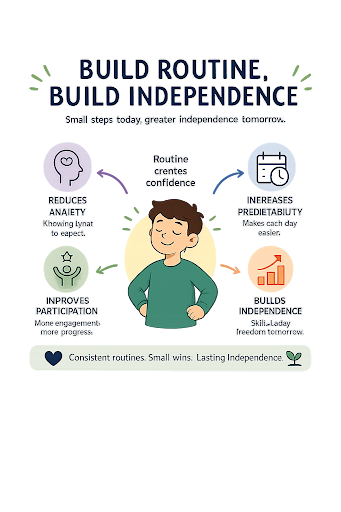
Routine reduces the need for constant reminders or rewards because activities become a normal part of daily life.
Consistent routines can help:
Reduce anxiety
Increase predictability
Improve participation
Build confidence
Support long term success
Over time, many individuals begin participating because they enjoy the benefits. They may feel stronger, more confident, more independent, or proud of their achievements.
Small successes should continue to be celebrated. Progress does not need to be dramatic to be meaningful. Building sustainable habits through repetition and positive experiences can promote long term behaviour change (Lally et al., 2010).
Final Thoughts
Motivation is not about finding a single reward that works forever. It is about understanding what matters to the individual and using that knowledge to create positive experiences, build confidence, and encourage participation.
The most effective motivation strategies are:
Personalised
Consistent
Flexible
Positive
Goal focused
With the right support, small moments of success can grow into lasting habits, greater independence, and meaningful long term outcomes.
References
Deci, E. L., & Ryan, R. M. (2000). The "what" and "why" of goal pursuits: Human needs and the self determination of behavior. Psychological Inquiry, 11(4), 227-268.https://doi.org/10.1207/S15327965PLI1104_01
Kazdin, A. E. (1982). The token economy: A decade later. Journal of Applied Behavior Analysis, 15(3), 431-445.https://doi.org/10.1901/jaba.1982.15-431
Koegel, R. L., Ashbaugh, K., Navab, A., & Koegel, L. K. (2012). Improving empathic communication skills in adults with autism spectrum disorder. Journal of Autism and Developmental Disorders, 42(8), 1619-1628.https://doi.org/10.1007/s10803-011-1403-3
Lally, P., van Jaarsveld, C. H. M., Potts, H. W. W., & Wardle, J. (2010). How are habits formed: Modelling habit formation in the real world. European Journal of Social Psychology, 40(6), 998-1009.https://doi.org/10.1002/ejsp.674
Ryan, R. M., & Deci, E. L. (2020). Intrinsic and extrinsic motivation from a self determination theory perspective: Definitions, theory, practices, and future directions. Contemporary Educational Psychology, 61, 101860.https://doi.org/10.1016/j.cedpsych.2020.101860