How Exercise Physiology Works Alongside Physiotherapy, OT, Speech & Behaviour Support
A collaborative approach across families, support workers, and allied health teams
Participants often work with physiotherapists, occupational therapists, speech pathologists, and behaviour support practitioners over long periods of time. Exercise Physiology plays an equally critical role, providing the ongoing movement-based support that helps participants sustain, practise, and build on the progress made in therapy.
The role of the Exercise Physiologist (EP) is to use exercise as a practical, real-world tool — not just a program on paper. The focus is on building functional capacity, strength, tolerance, and confidence with movement so participants can do more in their day-to-day life. A key part of the EP role is taking therapy goals and turning them into movement that actually makes sense outside the clinic.

Should participants only see an Exercise Physiologist?
The answer is no — and Exercise Physiology should never work in isolation.
While EP sessions may happen in a gym, clinic, or community setting, real progress happens everywhere else. The best outcomes occur when everyone involved in a participant’s care is working toward the same goals, rather than operating separately.
At the same time, without Exercise Physiology, therapy gains can be difficult to maintain long term. Exercise Physiology is not optional — it is a key support that helps participants build the physical capacity needed to apply and sustain therapy outcomes in everyday life.
How Exercise Physiology Complements Other Therapies
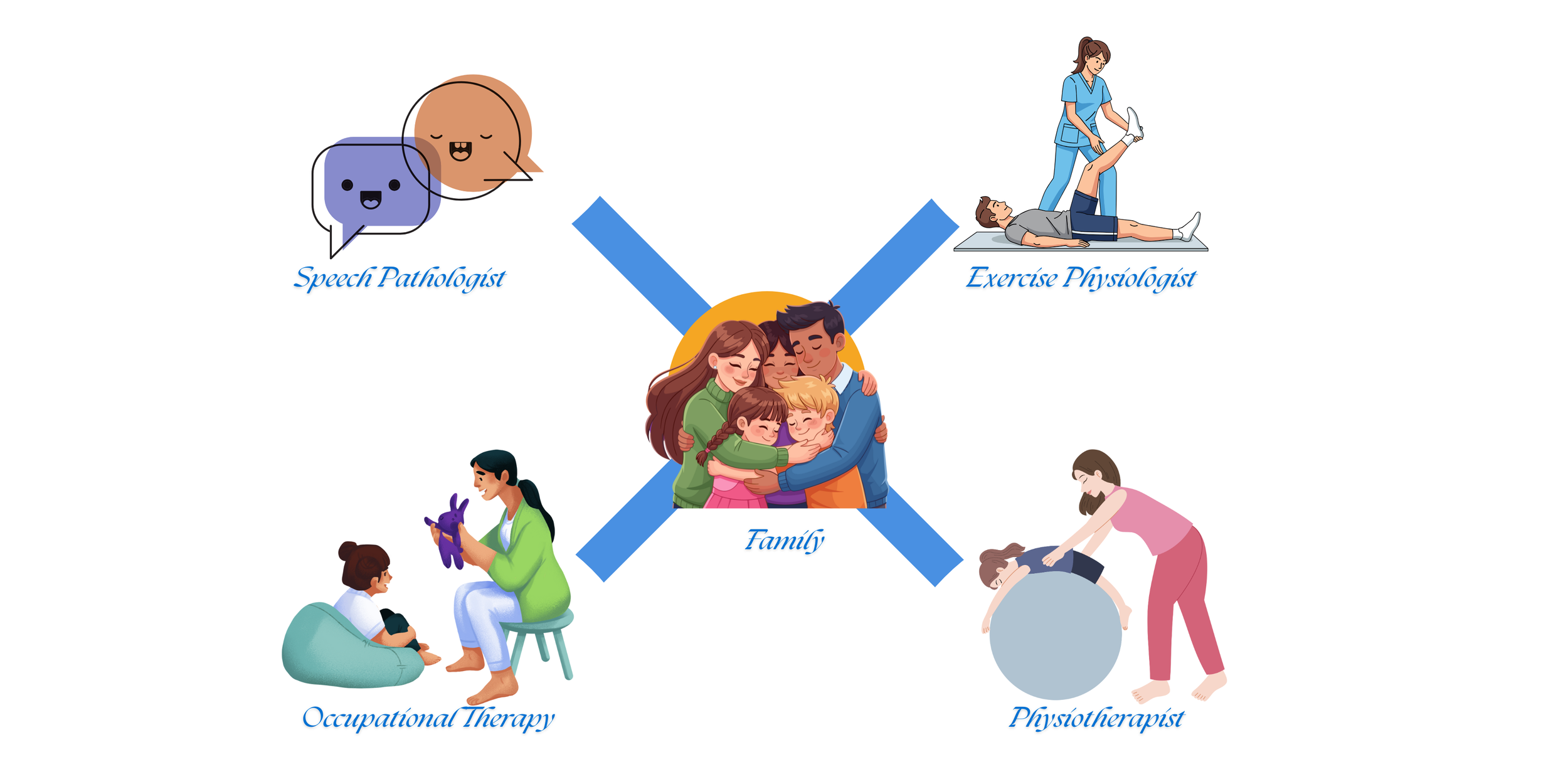
Each allied health professional plays a valuable and distinct role. Exercise Physiology adds to this work by bridging the gap between therapy and daily function.
Physiotherapists often focus on pain management, injury rehabilitation, and movement quality. Exercise Physiologists build on this foundation by progressively developing strength, endurance, and movement tolerance over time.
Occupational Therapists support independence with daily living tasks such as transfers, self-care, and household activities. These goals are reinforced through functional exercise that supports strength, balance, and confidence in real-world environments.
Speech Pathologists may support communication, social interaction, and participation. Exercise sessions — particularly group or community-based — can create natural opportunities to practise these skills in a supportive, movement-focused setting.
Behaviour Support Practitioners help identify triggers, develop strategies, and support regulation. Movement is often used as a tool for emotional regulation, routine building, and behaviour support, making Exercise Physiology a practical extension of these plans.
When these supports are aligned, participants receive consistent messages, clearer expectations, and programs that actually fit into daily life.
Why Collaboration Matters
Participants do not switch off when they leave a therapy session. If exercise only makes sense inside a clinic, it is unlikely to carry over into real life. Exercise Physiology ensures therapy goals continue to be practised, strengthened, and applied between appointments.
Strong collaboration comes down to communication:
Shared goals across therapists
Regular check-ins and updates
Clear expectations for families and support workers
Flexibility as needs, energy levels, or priorities change
When everyone is working from the same understanding, movement becomes more consistent, more confident, and more sustainable over time.
The Role of Families and Support Workers
Families are central to this process. They understand the participant better than anyone — what works, what doesn’t, and what truly matters. Exercise Physiologists take time to listen to family concerns, align exercise goals with family priorities, and explain programs clearly without unnecessary jargon. When families understand why an exercise matters, carryover outside sessions becomes far more likely.
Support workers also play a crucial role, particularly for participants who require day-to-day assistance. Exercise Physiologists work closely with support workers to:
Integrate exercise into daily routines
Adjust sessions based on mood, fatigue, or behaviour
Build confidence in supporting movement safely
Clear communication reduces uncertainty and helps everyone feel supported.
What This Looks Like in Practice
In practice, a collaborative EP approach means:
Exercise linked directly to real-life goals
Programs adapted based on fatigue, behaviour, or confidence
Flexibility when things don’t go to plan
Progress that continues outside scheduled sessions
It is less about ticking boxes and more about meeting the participant where they are on the day.
The Outcome
The result of this approach is stronger engagement, better carryover, and greater independence over time. Families and support workers feel supported rather than overwhelmed, and participants feel understood rather than pushed.
Exercise Physiology is one part of a bigger picture — but when delivered collaboratively, it becomes a powerful one. When everyone works together, progress makes sense, and it lasts.